
Hero Envelope Title
Hero Envelope Text
Prerequisites | Degree Requirements | Required Courses for MCRP | Course Plan | Application
Application available: Application for the accelerated program is here. This application should be completed during your junior year. You will need to apply for the MCRP program during your senior year. If you have questions, please write to Anne Brown at abrown33@uoregon.edu.
Application deadline: February 1 of junior year is the deadline for priority acceptance. If space is available after the initial admissions round, we will review qualified applicants on a monthly basis.
Application Decision: Students who are accepted into the program will be notified by March 1st and can enroll for graduate courses in the fall term.
Contact: Anne Brown, MCRP Director, abrown33@uoregon.edu.
Contact Us
Contact Bob Choquette (choquett@uoregon.edu) with questions about admissions procedures and Associate Professor Anne Brown (abrown33@uoregon.edu), faculty director of the Master of Community and Regional Planning program, with questions about the curriculum.
The 5-year Bachelor/Master’s Accelerated Master’s of Community and Regional Planning degree program is open to current University of Oregon undergraduate students majoring in Planning, Public Policy and Management. The Accelerated degree enables current PPPM majors to add one additional year of coursework to earn a Master of Community and Regional Planning degree.
Eligibility
- UO Undergraduate Students majoring in PPPM with a planning focus
- Minimum cumulative GPA of 3.5 at UO
- Community involvement (volunteering, organizing, internships, leadership experience, etc.)
- Excellent writing ability
- Specific interest in an issue or issues related to planning (e.g. housing, transportation, community development, environmental planning)
Degree Overview: Master of Community and Regional Planning
The Master of Community and Regional Planning (CRP) prepares innovative civic leaders through a challenging and hands-on curriculum and an inclusive learning environment. The program empowers students to achieve their full professional potential across various scales in the public, private, and nonprofit sectors.
The program emphasizes collaborative and hands-on learning, disseminating new relevant knowledge through interdisciplinary study, and partnering with state and local partners to solve societal challenges related to economic, environmental, spatial, and social issues.
The Community and Regional Planning program is a professionally accredited master's program that has awarded degrees in planning since 1968. The progressive planning and policy environment in Oregon, combined with the award-winning applied projects of the CRP program, offer students an innovative learning environment. Our degree program, designed to take two years, enrolls approximately 20 students each year, and our graduates are highly successful in finding jobs after graduation.
Unique Aspects of the Community and Regional Planning Program
Here are some of the many reasons students choose to study planning at the University of Oregon.
- Hands-on Learning Opportunities: We offer one of the most applied planning programs in the United States. You will go beyond the classroom to do real work in real communities with real clients in multiple core and elective classes:
- Community Planning Workshop (CPW) is consistently cited by students as a highlight. The workshop goes beyond typical hands-on instruction. You will work on a range of projects for paying clients who are supervised by experienced planning professionals. By the end of your first year, you will be presenting to boards, elected officials, and community organizations or running workshops.
- Sustainable Cities Initiative (SCI) connects courses across the university with a client city or organization. Students get to work on real projects offered by professionals in these organizations and present their findings.
- Community Planning Workshop (CPW) is consistently cited by students as a highlight. The workshop goes beyond typical hands-on instruction. You will work on a range of projects for paying clients who are supervised by experienced planning professionals. By the end of your first year, you will be presenting to boards, elected officials, and community organizations or running workshops.
- Collaborative: Students collaborate inside the classroom through teamwork and outside the class by serving as active participants in the governance of PPPM. Starting with the fall retreat, you can help build a community of colleagues through social events, field trips, and other activities. Our Equity Initiative focuses on creating a more inclusive environment for all students and helps support students for careers in diverse communities.
- Public Good: The Community and Regional Planning program emphasizes the role of planners to consider outcomes for current and future generations of the public, whether you work in the public, private, or nonprofit sectors. The program values diversity and respect in all its forms in pursuit of a more just and sustainable future. Students and faculty engage in partnerships to solve society's most pressing economic, environmental, spatial, and social issues.
- Interdisciplinary: The program offers flexibility, allowing you to choose electives that suit your background and career goals. You can also obtain concurrent degrees or certificates with several departments. Options include:
- Landscape architecture
- Architecture
- Environmental studies
- Economics
- Geography
- Sociology
- Political science
- Law
Research Opportunities:
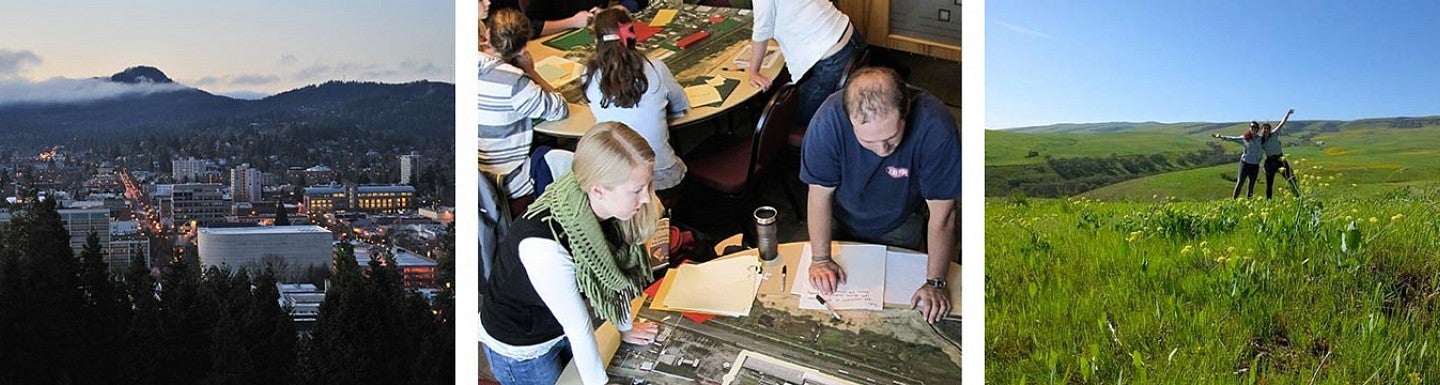
The Institute for Policy Research and Engagement (IPRE) conducts applied research that assists Oregon communities through planning and technical assistance. Programs include:
- Oregon Partners for Disaster Resilience (OPDR) natural hazard planning and coordination of community outreach and education.
- Economic Development Administration Center (EDA) a joint program focused on economic development involving IPRE, PPPM, and the Center for Sustainable Business, which is funded by the U.S. Economic Development Administration.
Sustainable Cities Institute applied think-tank engaged in research, teaching, and community partnerships related to sustainability in cities.
Careers in Planning
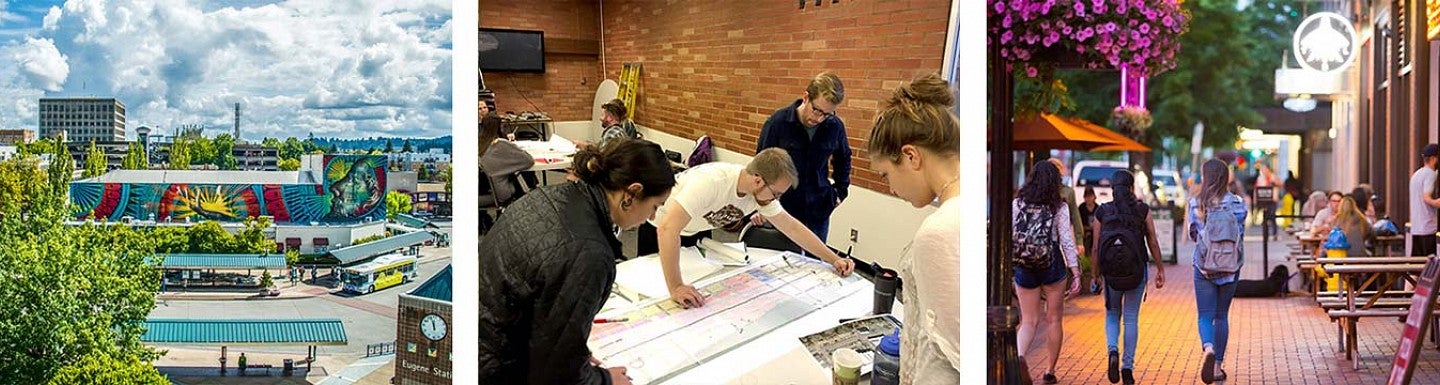
You'll graduate with a broad-based planning education that provides a range of employment opportunities. Oregon graduates have pursued successful careers in a wide range of sectors:
Public sector jobs (local, state, and federal):
- Local government land use planner
- Community development director
- Social services staff
- Impact assessment specialist
- Environmental planner
- Emergency services director
Private sector employers:
- Planning consultant firms
- Private developers
- Utility companies
Nonprofit and research employers:
- Sustainable business organizations
- Economic development corporations
- Advocacy groups
- Political associations
- State research bureaus
Internships and Career Support
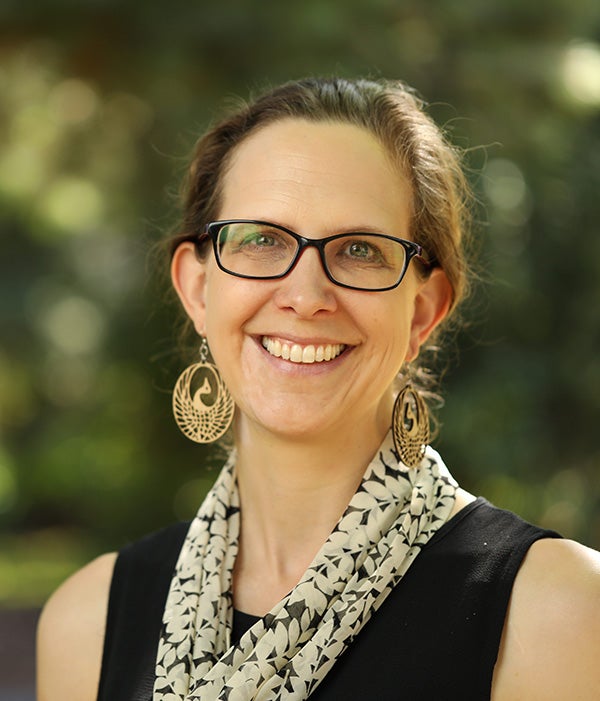
Our Career Services Director (Julie Voelker-Morris) supports graduate students in seeking internships while in school and careers after graduation.
The PPPM Internship Program offers an array of career and professional development services including:
- individual consultations
- classroom instruction
- résumé and cover letter reviews
- mock interviews
- announcements of internships
Our Master of Community and Regional Planning Program ranks in the top 10 programs in the West and the top 15 small programs in the country. We train policy-oriented planners to become change agents who'll engage communities and translate innovative ideas into practice to make a real difference. Our commitment to building strong communities, equity and inclusion, flexible curriculum, and extensive career support sets us apart.
Prerequisites to be completed before applying
- PPPM 205 Introduction to City Planning, 4 credits
- PPPM 315 Principles and Technical Foundations, 4 credits*
Prerequisites to be completed in junior year (before fourth/senior year)
- PPPM 440 Land Use Planning, 4 credits
- PPPM 434 Urban GIS, 4 credits
- PPPM 412 Prof Devp, 2 credits
- PPPM 410 Real World or 466 Local Solutions Studio, 4 credits
- PPPM 404 Internship; prerequisite PPPM 412
Courses to complete senior/fourth or MCRP year
- One of the following:
- PPPM 4/513: Statistics for Public Decision-Making*
- PPPM 4/520: Practical Surveys for Public Service*
- PPPM 4/521: Qualitative Analysis for Public Decision-Making*
- One of the following:
- PPPM 417: Development Process*
- PPPM 441: Planning for Growth and Housing*
- One of the following:
- PPPM 448: Collaboration*
- PPPM 450: Community Organizing*
- PPPM 647: Designing Community Engagement*
A grade of 3.7 (A-) or higher are required in all 400-level prerequisites* to waive graduate-level equivalent course in the MCRP.
If PPPM graduates have not completed the prerequisites or did not receive an A or A- in those courses, they will be required to take the equivalent graduate course or a similar course (identified by their faculty advisor) at the UO. This may delay their MCRP degree for one to two terms.
Accelerated MCRP Degree Requirements:
- 17 graduate-level credits at the 500 or 600 level to be completed their senior year along with remaining undergraduate requirements.
- 36 graduate-level credits at the 500 or 600 level following their fourth/senior year level.
- At least 30 credits of the 45 credits must be taken in PPPM. 15 may be in other departments, with adviser approval.
- At least 24 credits must be graded.
- At least 9 credits must be 600-level.
MCRP Course Plan for 4+1 Advanced Master’s Program:
Fall Term, Senior Level (4th Year or equivalent undergrad)
Note, needs to take PPPM 315 (skills/foundations) in fall of junior or senior year to waive out of graduate requirement (PPPM615).
PPPM 617 History of Planning & Urbanization
4 Credits
PPPM 623 Professional Development I
1 Credit
Winter Term, Senior Level (4th Year or equivalent undergrad)
PPPM 614 Urban Design Workshop
2 Credits
PPPM 611 Intro to Planning Practice
4 Credits
PPPM 630 Visual Design
4 Credits
Spring and Summer Term, Senior Level (4th Year or equivalent undergrad)
PPPM 612 Legal Issues or 616 Planning Theory & Ethics
4 Credits
Total Credits
18 Credits
Summer Prior to Master's year
PPPM 4 or 534 (if not yet completed) Urban GIS
4 Credits
Total Credits
4 Credits
Fall Term, MCRP Coursework
PPPM 625 Community Planning Workshop
5 Credits
Electives or choice requirements
4 - 8 Credits
Winter Term, MCRP Coursework
PPPM 626 Community Planning Workshop
5 Credits
PPPM 663 Professional Development II
1 Credit
Electives or choice requirements
4 - 8 Credits
Spring and Summer Term, MCRP Coursework
PPPM 612 Legal Issues or 616 Planning Theory & Ethics
4 Credits
Electives or choice requirements
4 Credits
PPPM 4 or 534 (if not yet completed) Urban GIS
4 Credits
Total Credits
36 Credits
Program Total
8
Total Credits
58 Credits
Required Courses for MCRP Year:
PPPM 616 Planning Theory and Ethics
or
PPPM 612 Legal Issues
4 Credits
PPPM 623 Professional Development
1 Credit
PPPM 663 Professional Development II
1 credit
PPPM 625 & 626 Community Planning Workshop (Fall/Winter)
5+5 credits
Application:
- Apply by February 1st of junior year of undergraduate study for priority acceptance. Students who are accepted into the program will be notified by March 1st and can enroll for graduate courses in the fall term. If space is available after the initial admissions round, we will review qualified applicants on a monthly basis.
- Required application materials:
- Statement of Purpose questions
- Unofficial UO transcript
- Resumé
- Two professional references from PPPM faculty members
- Optional: GRE scores
- The Statement of Purpose should address:
- Why are you interested in studying community and regional planning?
- What are your professional goals with this degree?
- What do you hope to accomplish with this degree?
- What professional and personal experiences and values will you bring to this program and the profession?
- OPTIONAL: Share any personal challenges, barriers, or hardships you faced, how you overcame them, and how they have shaped your academic experience and professional goals. This could be an opportunity for you to explain something on your transcript that may raise concerns to the admissions committee.